Luxury Accessories Guide: Elevating Your Style with Statement Pieces
Luxury accessories guide: judge leather, silk, cashmere, eyewear, watches and jewelry by craftsmanship not logos, and build a lasting collection of statement pieces.…
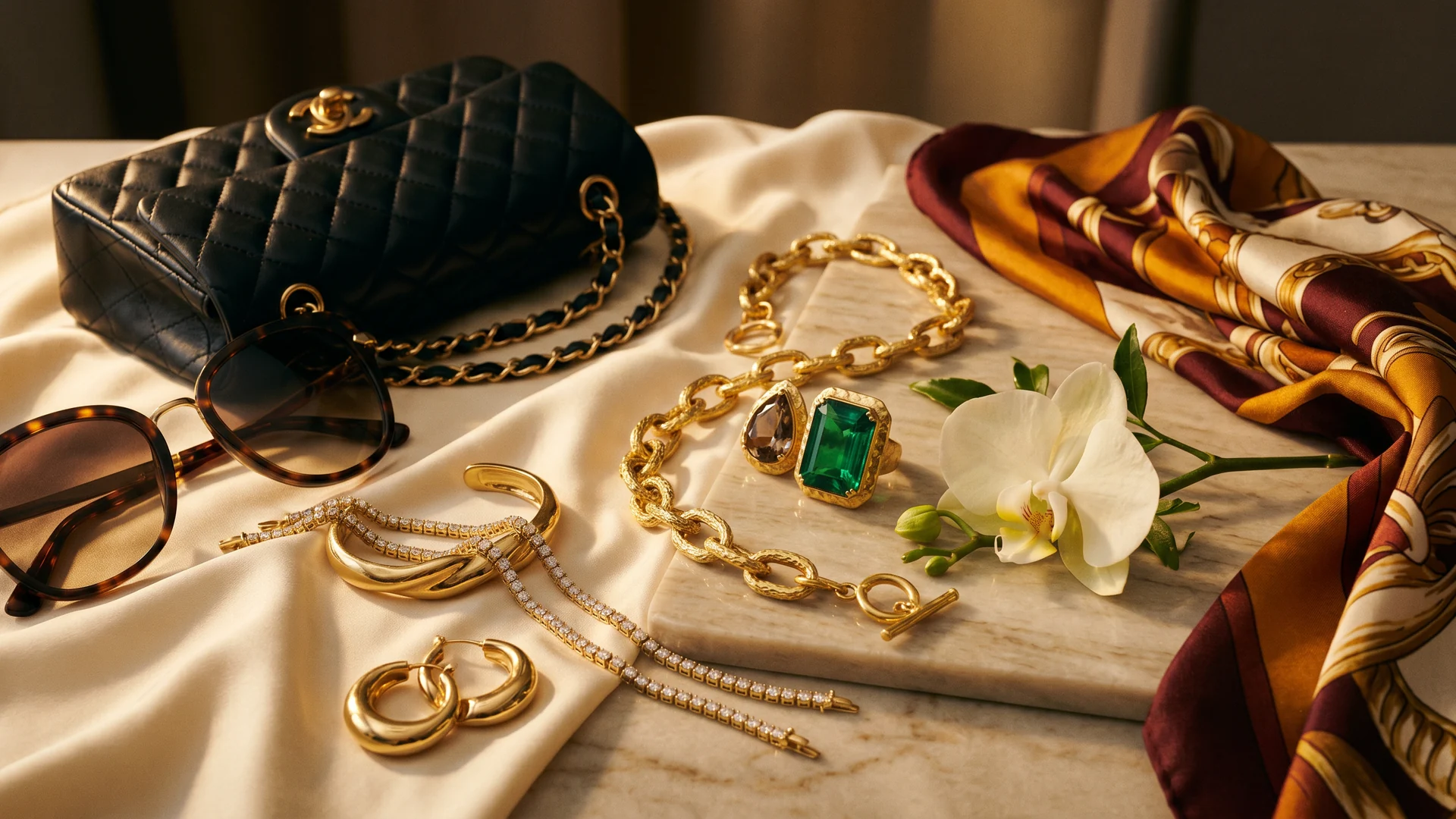
Luxury accessories elevate any outfit into a personal statement, and the smartest approach is to buy fewer, better-made pieces judged by craftsmanship rather than the logo on the label.
Key Takeaways
- Full-grain leather is the most durable and prized hide because it retains the skin's natural surface and ages rather than wears out, developing an irreplaceable patina over time.
- Heirloom-grade leather is identified by tight hand saddle stitching, hand-painted burnished edges, substantial hardware with discreet maker's marks, and fine leather, suede, or woven linings rather than by the logo.
- Exotic skins such as alligator, crocodile, ostrich, and lizard require full CITES certification, which serves as proof of provenance and a guarantee of resale value.
- Each Hermes silk scarf can take up to two years to create with hand-rolled edges, and a single carre can be worn as neckwear, a bag accessory, a belt, a headscarf, or an evening shawl.
- Cashmere quality is measured by fiber length and diameter, with baby cashmere from young goats being the finest grade; longer, finer fibers resist pilling and produce a weightless drape.
- Fine watches from houses like Patek Philippe, Rolex, Audemars Piguet, and Jaeger-LeCoultre are valued for hand-finished movements and complications rather than for merely telling time.
- The enduring lesson of luxury is to buy less and choose better, investing in fewer well-made pieces that age with grace and retain meaning and value over a lifetime.
🌐 Also available in: Deutsch
Why Accessories Are the True Language of Luxury
Luxury accessories are the punctuation marks of personal style, they can elevate a simple ensemble into a memorable statement. From silk scarves to exotic leather goods, the world of high-end accessories offers endless opportunities for self-expression. While a well-cut coat or a tailored suit forms the sentence of an outfit, it is the accessory that supplies the emphasis: the exclamation point of a striking cuff, the comma of a perfectly knotted scarf, the closing flourish of a hand-rolled pocket square.
There is a reason that the most discerning dressers invest as carefully in their accessories as they do in their wardrobe. A garment dresses the body; an accessory reveals the person. It is the place where individual taste, knowledge, and confidence become visible. The right statement piece does not shout for attention, it rewards a closer look. This guide explores the major categories of luxury accessories, how to evaluate quality, and how to build a collection that grows more meaningful with every passing year.
The Power of Leather Goods
A finely crafted leather accessory speaks volumes about its owner. Hermès belts, Bottega Veneta wallets, and Berluti briefcases represent the pinnacle of leather craftsmanship. The patina that develops on quality leather over time tells a personal story that cannot be replicated, a record of journeys, handling, and the gradual deepening of color that no factory finish can imitate.
What separates an heirloom-grade leather piece from a merely expensive one is rarely the logo. It lies in the hide itself, in the precision of the stitching, and in the finishing of the smallest details. The connoisseur learns to read these signals before reading the label.
How to Judge Leather Quality
- Grade of hide: Full-grain leather, which retains the natural surface of the skin, is the most durable and the most prized. It ages rather than wears out.
- Stitching: Tight, even saddle stitching, often done by hand in the finest workshops, is both stronger and more beautiful than machine-run seams.
- Edges: Hand-painted and burnished edges signal genuine craftsmanship; raw or plastic-coated edges suggest a corner cut.
- Hardware: Buckles, clasps, and zips should feel substantial, move smoothly, and carry discreet maker’s marks.
- Lining: Quality houses line their goods in fine leather, suede, or woven textile rather than thin synthetic material.
Exotic Skins and Responsible Sourcing
Exotic skins, alligator, crocodile, ostrich, and lizard, command premium prices and deliver unmatched luxury. Their distinctive grain, suppleness, and rarity have made them perennial markers of the highest end of leather goods. However, ethical sourcing has become paramount. Reputable houses now provide full CITES certification and transparency regarding the origin of exotic materials, and many invest directly in regulated, traceable supply chains. When considering an exotic-skin piece, treat documentation as part of the purchase: a legitimate certificate is not bureaucracy but proof of provenance and a guarantee of resale value.
Silk and Cashmere Essentials
The Hermès silk scarf remains the gold standard of luxury accessories. Each design can take up to two years to create, involving dozens of screens for color application, and the finished carré is finished with hand-rolled edges that betray the quality instantly to anyone who turns one over. Vintage scarves from the 1960s and 1970s are particularly collectible, prized for retired designs and archival colorways that rarely return.
The genius of the silk scarf lies in its versatility. Learn multiple tying techniques to maximize its potential, a scarf can transform from neckwear to a bag accessory to a belt in moments, and the same square can read as classic at the office or bohemian on a summer evening.
Ways to Wear a Silk Scarf
- Knotted loosely at the neck for an effortless Parisian air.
- Tied to the handle of a handbag as a flash of color and personality.
- Folded into a slim band and worn as a belt or threaded through belt loops.
- Wrapped as a headscarf or used to tie back the hair in warmer months.
- Draped as a shawl over the shoulders for evening.
The Cashmere Standard
Cashmere accessories from Loro Piana and Brunello Cucinelli offer unparalleled softness and warmth. Their quality is measured by fiber length and diameter, with baby cashmere, the exceptionally fine, soft undercoat collected from young goats, representing the absolute finest grade available. Longer, finer fibers resist pilling, hold their shape, and produce that weightless drape that distinguishes true luxury knitwear from its imitators.
These pieces are investments that improve with age when properly cared for. A great cashmere scarf or stole is rarely a passing purchase; it becomes a companion across seasons, softening rather than degrading with each wear. Treated with respect, gentle hand-washing or specialist cleaning, careful storage, and protection from moths, it can last a lifetime.
Sunglasses and Eyewear
Luxury eyewear combines optical precision with design excellence. Brands like Cartier, Jacques Marie Mage, and Chrome Hearts produce limited-edition frames using precious metals and exotic materials, treating eyewear as fine jewelry for the face rather than a mere functional object. Beyond aesthetics, the lens technology, polarization, photochromic adaptation, and blue-light filtering, represents significant engineering achievement, and the best lenses protect the eyes as conscientiously as they flatter the wearer.
Choosing eyewear well is partly a matter of architecture. The frame should harmonize with the proportions of the face: angular frames bring definition to softer features, while rounded or softened shapes balance stronger, more angular bones. A frame that sits correctly, with the brow line echoing the natural arch and the temples gripping without pinching, will always look more expensive than one that fights the face, regardless of price.
What to Look For in Fine Eyewear
- Frame material: Italian or Japanese acetate, titanium, and solid gold or platinum accents signal serious construction.
- Hinges: Reinforced or seven-barrel hinges and quality spring mechanisms indicate durability.
- Lens quality: Genuine UV protection, scratch-resistant coatings, and distortion-free optics.
- Fit: Adjustable nose pads and properly weighted temples for all-day comfort.
Watches: The Quiet Anchor of a Collection
If accessories are the vocabulary of personal style, the timepiece is among its most eloquent words. A fine watch is simultaneously an instrument, an example of mechanical artistry, and a deeply personal heirloom. Houses such as Patek Philippe, Rolex, Audemars Piguet, and Jaeger-LeCoultre have built their reputations on movements assembled and finished by hand, often through complications that take years of training to master.
For the person building a collection, a watch rewards patience and education more than impulse. Understanding the difference between a manual and automatic movement, recognizing the hand-finishing on a bridge or balance wheel, and appreciating the heritage of a particular reference all deepen the pleasure of ownership. A well-chosen timepiece is rarely about telling time, it is about carrying a small, perfect machine that connects its wearer to generations of craft.
Jewelry and Statement Pieces
Jewelry is where the idea of the statement piece reaches its fullest expression. A single bold cuff, a sculptural ring, or a signature necklace can define an entire look and become inseparable from the identity of the person who wears it. The great maisons. Cartier, Van Cleef & Arpels, Bulgari, and Tiffany & Co. among them, have made their names not only through precious materials but through instantly recognizable design languages refined over decades.
The art of wearing statement jewelry lies in restraint. One commanding piece, given room to breathe, will always read as more confident than several competing for attention. Consider how the weight, color, and scale of a piece interact with the neckline, the skin, and the occasion.
Building a Considered Jewelry Wardrobe
- Anchor pieces: A few versatile classics, fine hoops, a tennis bracelet, a slim chain, that work with almost everything.
- Statement pieces: One or two bold designs reserved for moments when you want the jewelry to lead.
- Metals and stones: Choose tones that flatter your skin and harmonize with the rest of your wardrobe rather than chasing trends.
- Provenance: Keep certificates and receipts; documented stones and signed pieces retain value and tell a story.
Gloves, Hats, and the Finishing Details
The true connoisseur pays attention to every detail. Hand-stitched leather gloves from Dents, Panama hats from Montecristi, and hand-rolled silk pocket squares complete an outfit with quiet confidence. These are the accessories that signal genuine sophistication, understood by those who know, invisible to those who do not.
It is precisely because these pieces are easy to overlook that they carry such weight. A finely woven Montecristi hat, plaited from delicate fibers over many weeks, folds and travels far more gracefully than any mass-produced version. A pair of unlined leather gloves, cut to follow the contours of the hand, becomes a second skin. The pocket square, never matched too literally to the tie, adds a final, deliberate note of color. None of these items announces itself loudly; together they form the difference between simply being dressed and being well dressed.
Caring for and Curating Your Collection
A luxury accessory is only as good as the care it receives. Quality materials reward attention and punish neglect, and a small amount of ongoing maintenance preserves both beauty and value over the long term. Building a collection thoughtfully, choosing fewer, better things, is itself the most sophisticated strategy of all.
Practical Care Principles
- Leather: Store away from direct sunlight and heat, use dust bags, condition occasionally, and allow pieces to rest between uses.
- Silk and cashmere: Clean gently and infrequently, fold rather than hang where possible, and protect from moths and damp.
- Eyewear and watches: Keep in protective cases, service mechanical watches at recommended intervals, and clean lenses with proper cloths.
- Jewelry: Store pieces separately to avoid scratching, and have settings checked periodically by a professional.
Buy Less, Choose Better
The most enduring lesson of luxury is that quality outlasts quantity. A single exceptional scarf, a beautifully made belt, or one well-considered watch will serve longer and speak more clearly than a drawer full of disposable pieces. Invest in items that age with grace, that carry meaning, and that you genuinely love, and they will reward you not only with style but with the quiet satisfaction of owning something made to last.
Ultimately, luxury accessories are not about spending; they are about discernment. They are the small, deliberate choices that turn an outfit into a signature and a wardrobe into a reflection of the person behind it. Mastered with knowledge and worn with confidence, the right statement piece becomes more than an accessory, it becomes part of who you are.
Frequently Asked Questions (FAQ)
How do you judge the quality of luxury leather goods?
Judge luxury leather by the hide, stitching, edges, hardware, and lining rather than the logo. Full-grain leather, which keeps the skin's natural surface, is most durable and ages well. Look for tight hand saddle stitching, hand-painted burnished edges, substantial smooth-moving hardware with maker's marks, and linings of fine leather, suede, or woven textile instead of thin synthetics.
Why do Hermes silk scarves cost so much and how can you wear one?
The Hermes silk scarf is the gold standard because each design can take up to two years to create, using dozens of screens for color and finished with hand-rolled edges. Its value lies in versatility: a single carre can be knotted at the neck, tied to a handbag handle, folded into a belt, wrapped as a headscarf, or draped as an evening shawl.
What makes cashmere from brands like Loro Piana and Brunello Cucinelli worth the investment?
Cashmere from Loro Piana and Brunello Cucinelli offers unparalleled softness and warmth, with quality measured by fiber length and diameter. Baby cashmere, the fine undercoat from young goats, is the absolute finest grade. Longer, finer fibers resist pilling, hold their shape, and drape weightlessly. Properly cared for through gentle washing and protection from moths, these pieces can last a lifetime.
What should you look for when buying fine luxury eyewear?
Look for serious frame materials such as Italian or Japanese acetate, titanium, or solid gold and platinum accents, plus reinforced or seven-barrel hinges with quality spring mechanisms. Lenses should offer genuine UV protection, scratch-resistant coatings, and distortion-free optics. Fit matters too: adjustable nose pads, properly weighted temples, and a frame shape that harmonizes with your facial proportions will always look more expensive.
Do exotic-skin accessories require certification?
Yes. Exotic skins such as alligator, crocodile, ostrich, and lizard require full CITES certification from reputable houses, who now provide transparency about origin and invest in regulated, traceable supply chains. Treat documentation as part of the purchase: a legitimate certificate is not bureaucracy but proof of provenance and a guarantee of resale value.
How should you build and wear a luxury jewelry collection?
Build a considered jewelry wardrobe around versatile anchor pieces like fine hoops, a tennis bracelet, or a slim chain, plus one or two bold statement designs. Choose metals and stones that flatter your skin rather than chasing trends, and keep certificates and receipts. When wearing statement jewelry, practice restraint: one commanding piece given room to breathe reads as more confident than several competing for attention.
How do you care for luxury accessories to preserve their value?
Store leather away from sunlight and heat in dust bags, condition occasionally, and let pieces rest between uses. Clean silk and cashmere gently and infrequently, folding rather than hanging and protecting from moths. Keep eyewear and watches in cases, servicing mechanical watches at recommended intervals. Store jewelry separately to avoid scratching and have settings checked periodically by a professional.
Which understated accessories signal genuine sophistication?
Finishing details signal true sophistication: hand-stitched leather gloves from Dents, Panama hats from Montecristi, and hand-rolled silk pocket squares complete an outfit with quiet confidence. A Montecristi hat plaited over many weeks travels gracefully, unlined gloves become a second skin, and a pocket square never matched too literally to the tie adds a final, deliberate note of color.
More from News
Future of Luxury Fashion: Innovation, Technology, and the Next Frontier
Discover the future of luxury fashion: how AI, blockchain, digital couture, bio-fabricated materials and sustainability are reshaping maisons and the …
Celebrity Style Guide: Decoding the Fashion of the Famous
Decode celebrity style: how stylists, red carpet partnerships, and social media shape fashion, plus archetypes and tips to build a celebrity-inspired …
Luxury Lifestyle Guide: Curating the Art of Living Well
Discover the luxury lifestyle as the art of living well: quiet luxury in travel, wine, home design, wardrobe, watches, and wellness, curated with inte…